


Infinite Gacha Fever
BKP Global
Infinite Gacha Fever is a casual mobile game built around one clear attraction: collecting anime-styled goddesses through its TCG-inspired gacha experience. I found it easiest to understand as a collection-focused game rather than a traditional card battler. The pleasure comes from opening draws, seeing which character appears, and gradually shaping a personal collection that feels different from another player’s.
That focus makes the game immediately approachable. I do not need to learn a complicated control scheme before enjoying it, and short sessions fit naturally into spare moments. At the same time, the collection loop asks me to accept uncertainty. The next draw might be exciting, ordinary, or simply another step toward a set I want to complete. Whether that feels rewarding depends heavily on how comfortable I am with gacha design.
Why the collection system is the real experience
The most important capability here is the ability to collect anime goddesses through repeated gacha draws. That sounds simple, but it changes the rhythm of the whole game. Instead of treating every session as a race toward a final objective, I approach it as a series of small chances. The anticipation before a reveal becomes the main moment of tension.
In my experience, this works best when I set a modest goal before opening the game. I might decide to use a short session to check available rewards, make a few sensible draws, and then stop rather than chasing a particular result indefinitely. Without that boundary, the collection loop can easily turn from a relaxing pastime into a cycle of constantly wanting one more attempt.
The TCG framing also gives the characters a sense of ownership. Even when the game is being played casually, collecting is more satisfying when I think of the roster as something I am building over time. The appeal is not only visual. It is the feeling that each new addition changes the shape of the collection and gives me another reason to return.
Related News






That is the real effect of the game’s central idea: it turns a short reveal into a reason for continued attention. Players who enjoy organizing, completing, comparing, or simply discovering character designs will understand the appeal quickly. Players who need deep tactical battles or a clearly defined ending may find the loop less convincing.
What a normal session feels like
I would approach a session in three stages. First, I would check what resources are available and decide what I am willing to spend in-game. Second, I would make draws with a specific purpose instead of tapping through them automatically. Finally, I would review the result and close the game while the experience still feels enjoyable.
This routine matters because gacha games can make every decision feel urgent. A calmer approach helps me judge whether I actually like the collection I am building or whether I am only reacting to the possibility of a rare-looking reveal. The game is more enjoyable when I treat each draw as entertainment, not as a promise of progress.
Gallery
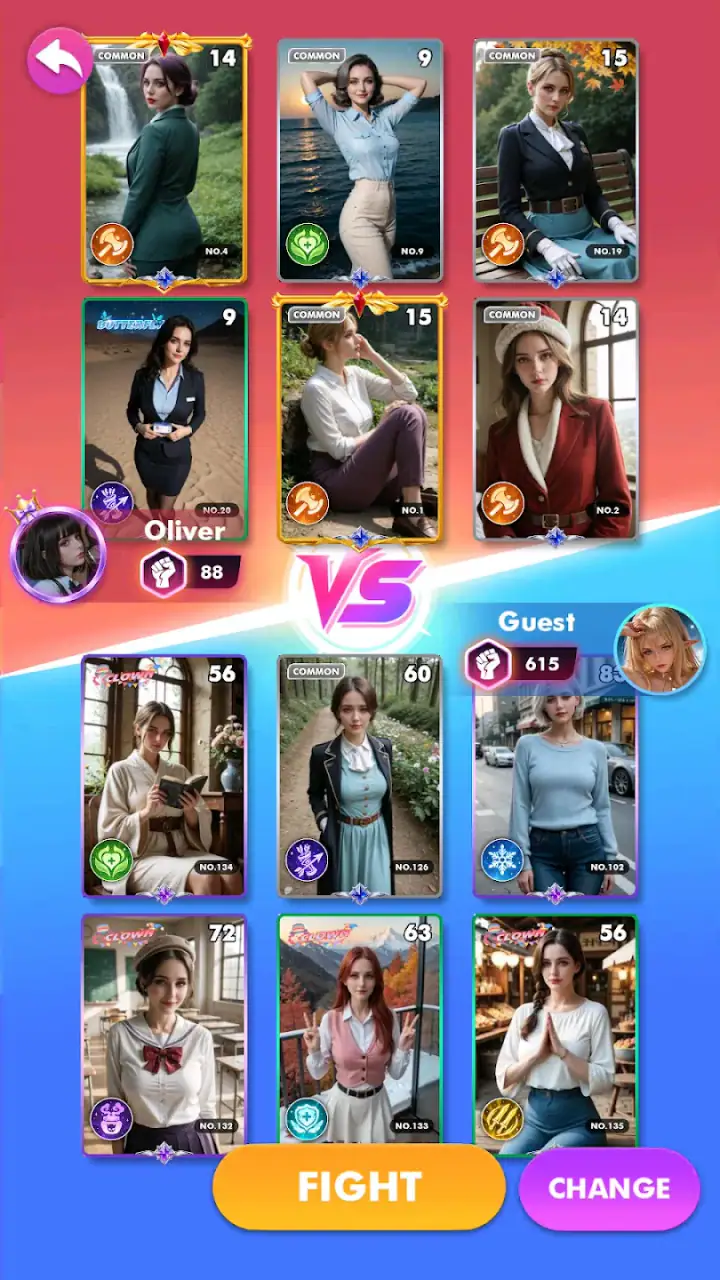
For example, imagine having a few minutes during a commute or while waiting for an appointment. I could open the game, inspect my current collection, use available free resources, and make a small number of attempts. That is a realistic use case for a casual title: no long uninterrupted block of time is required, and the central action is easy to understand even when I have not played for a day.
On the other hand, I would not choose it for a quiet evening when I want a story with a strong conclusion or a strategy game where every outcome follows from careful planning. The draw itself introduces chance, so preparation can improve how I use resources but cannot remove the uncertainty at the heart of the experience.
How to make the gacha loop feel less wasteful
My first practical tip is to separate collecting from chasing. If I want a broad roster, I can enjoy ordinary additions and avoid judging every session by whether it produced a specific favorite. If I want one particular character, I should decide in advance how much time or currency I am prepared to use. That simple distinction prevents a disappointing result from controlling the rest of the session.
My second tip is to pause after a notable pull. It is tempting to continue immediately because the game has created momentum. Taking a moment to inspect what I received helps me notice whether the new character genuinely improves my collection or merely feels exciting because it appeared at the right moment.
A third useful habit is to play with a collection objective that is broader than rarity. I can focus on completing a visual theme, discovering unfamiliar characters, or building a roster that feels personally interesting. That approach gives ordinary results more value and makes the game less dependent on a single lucky reveal.
I would also keep purchases separate from impulse. The game is free to start, but its optional items range from $1.99 to $129.99 per item. That is a wide enough range that I would never make a purchase while frustrated by a poor result. Anyone considering spending should decide on a firm limit before playing and treat the purchase as a leisure expense, not as a way to recover from bad luck.
The best scenario for playing
The strongest scenario is a player who likes anime character collecting and wants a lightweight game for brief, repeatable sessions. The game’s casual category suits that use well. I can return to it when I want a quick burst of anticipation without committing to a lengthy match, a large open world, or a complicated deck-building session.
It is also a reasonable choice for someone who enjoys the social feeling of collecting even when the actual activity is solitary. Comparing a new addition with the rest of a personal roster can provide a small sense of progress. The collection becomes a record of the sessions I have played, rather than just a menu of items.
There is another good fit: players who enjoy visual discovery more than competitive mastery. Traditional TCG alternatives often ask me to study card interactions, resource curves, counters, and matchups. Infinite Gacha Fever places its emphasis elsewhere. I can spend more attention on the characters and the excitement of acquisition, which makes the game easier to pick up but also less satisfying for players who want every outcome to reward skill.
I would be more cautious recommending it to children or to anyone who finds randomized rewards difficult to manage. Its content rating is Teen, and the presence of in-app purchases makes parental awareness sensible. Even for adults, the right mindset is important. The game can be enjoyable as a controlled hobby, but it is a poor choice if I am looking for guaranteed progress from every session.
Where it differs from ordinary card games
Compared with a conventional digital card game, the main difference is where the satisfaction comes from. In a competitive card game, I usually expect to earn improvement by learning rules, refining a deck, and making better decisions during a match. Here, the collection reveal is the headline event. My choices still matter in how I manage sessions and resources, but chance remains central.
That makes Infinite Gacha Fever more accessible than many strategy-heavy alternatives. I can understand its attraction without studying a large rulebook. It also makes the experience less dependable for players who want a clear sense that skill alone determines success. If I want a game that rewards careful planning above all else, a standard TCG may be a better fit.
Compared with a purely idle collector, the anime TCG presentation gives the activity a more deliberate identity. I am not simply watching numbers rise. I am paying attention to which goddess appears and how that result changes the collection. The trade-off is that the game’s appeal can become repetitive if the reveal itself stops feeling meaningful.
Compared with a story-driven anime game, this title is more convenient but likely less emotionally demanding. I can dip in and out without remembering a long plot, yet I also should not expect the same narrative investment from a collection-first design. The right comparison depends on whether I want a character journey or the immediate pleasure of acquiring characters.
Important tradeoffs before downloading
The free entry point is a genuine advantage. I can try the game without paying first, which is useful because the collection loop is personal: some players will find the reveals compelling, while others will lose interest quickly. The free model lowers the risk of discovering that the format is not for me.
The trade-off is the pressure that can surround optional spending. A wide purchase range means I would pay close attention to my own habits. I would not assume that buying more automatically makes the game more enjoyable. In a gacha-centered game, spending can shorten the wait for more attempts, but it cannot guarantee that the emotional result will match the cost.
Another limitation is repetition. Because the core action revolves around collecting through draws, players who need constant mechanical variety may feel that sessions blur together. I would recommend taking breaks rather than forcing a long play period. The game works better as a small daily or occasional ritual than as an all-day activity.
There is also a difference between collection satisfaction and completion. If I enjoy having a varied roster, the game can remain pleasant even when progress is uneven. If I feel that a collection is only worthwhile when it is complete, random acquisition may become frustrating. That is not a flaw I can solve through better reflexes; it is a basic consequence of the chosen design.
The Teen rating is another reason to consider the intended audience carefully. I would explain the randomized collection format and the purchase options before letting a younger player use it. The game may look colorful and approachable, but its spending structure deserves the same attention as its visual style.
Performance, access, and what to expect
The game is available at no upfront cost and requires Android 6.0 or later. That makes it accessible to people using older compatible Android devices, although actual comfort will still depend on the phone’s general condition and available space. I would check the device before committing to it as a regular game, especially if I already keep several large titles installed.
The current version is 1.0.9, and the developer is BKP Global. Those details are useful when checking whether the installed copy is current, particularly if a feature or menu behaves differently after an update. I would also remember that a version number does not change the central advice: the game should be judged by whether its collection loop fits my habits.
The game has reached over 100 thousand installs and holds a 4.7 average from around 2.8 thousand ratings. That level of interest suggests that the concept is landing well with a meaningful audience, but I would still read the experience personally rather than treating the rating as a guarantee. A strong average can tell me that many players enjoy the format; it cannot tell me whether I prefer randomized collecting to direct progression.
There are also 52 written reviews, which can be useful for spotting recurring reactions from players who explain what they like or dislike. I would pay particular attention to comments about the collection pace, purchase pressure, and long-term repetition, because those are the areas most likely to determine whether the game remains enjoyable after the first few sessions.
Who gains the most from the design
The best audience is someone who already knows that they enjoy gacha collecting and wants an anime-focused version with a casual pace. That player is more likely to appreciate small discoveries, accept uneven results, and return without demanding a major new objective every time.
It can also suit a busy player who wants a low-commitment game. A short session can still contain a complete activity: open the game, inspect the collection, use available opportunities, and leave. I like that structure because it does not require me to reserve an entire evening just to feel that I have played properly.
Collectors who enjoy personal organization may get more from it than players who only care about winning. I can create my own reasons to continue, such as looking for characters that fit a preferred style or simply trying to make the roster feel more varied. This personal layer is important because the game’s motivation is not the same for everyone.
By contrast, I would suggest skipping it if I dislike randomized rewards, feel pressure to spend when progress slows, or need a strong competitive system. I would also choose another game if I want direct control over which characters I unlock. A conventional card game, a fixed-progression RPG, or a story-led anime title may offer a better experience in those cases.
My recommendation after using the collection loop
I see Infinite Gacha Fever as a focused casual game rather than an all-purpose anime adventure. Its strength is the clarity of its appeal: collect attractive characters, enjoy the anticipation of each draw, and build a roster at a comfortable pace. That focus keeps the game easy to approach and makes it suitable for short breaks.
Its weakness is equally clear. Randomized collecting can feel repetitive or expensive when I stop treating it as light entertainment and start expecting guaranteed results. The optional purchase range makes self-control especially important, so I would play for free first and decide whether the core loop holds my attention before spending anything.
My honest recommendation is to try it if the reveal and collection process sounds more appealing than tactical matches or story progression. I would keep sessions short, set a spending boundary, and judge success by whether the collection is becoming enjoyable rather than by whether every draw produces a favorite. With that approach, BKP Global’s casual game can be a pleasant companion for spare moments. Without it, the same design may feel like an endless chase, and another type of mobile game would serve you better.
FAQs for Infinite Gacha Fever
What is Infinite Gacha Fever?
Infinite Gacha Fever is a gacha-style mobile game focused on collecting characters, items, or other rewards through randomized draws. Players typically progress by completing stages, missions, and events while improving their collection. The appeal comes from discovering new rewards, building stronger teams, and taking part in limited-time content. Before downloading, remember that the exact gameplay experience can vary depending on the version, region, and updates available on your device.
Is Infinite Gacha Fever free to download and play?
The game may be available as a free download, but free access does not necessarily mean that every feature is completely free. Gacha games commonly include optional purchases for premium currency, extra attempts, bundles, or faster progression. You can usually begin playing without paying, although progress may require more patience. Parents and players should review the in-app purchase settings and use device-level purchase restrictions if necessary.
Does Infinite Gacha Fever require an internet connection?
An internet connection may be needed for important parts of Infinite Gacha Fever, including account access, randomized draws, advertisements, event updates, cloud saving, and server-based rewards. Some sections might work temporarily offline, but this should not be assumed unless the game clearly states it. A stable Wi-Fi or mobile-data connection is recommended, particularly when downloading additional files or participating in time-limited events.
Is Infinite Gacha Fever suitable for children?
Suitability depends on the game’s official age rating, content, advertising, and monetization features. Because Infinite Gacha Fever is based around randomized rewards, younger players may not fully understand the spending risks or the probability involved in obtaining rare items. Adults should check the store listing, privacy information, permissions, and purchase system before allowing a child to play. Parental controls are strongly recommended for shared devices.
What should I check before downloading Infinite Gacha Fever?
Before installing Infinite Gacha Fever, check whether your Android or iOS version is supported, how much storage space is required, and whether the game is officially available in your country. It is also worth reviewing recent user feedback for reports about crashes, advertisements, login problems, or aggressive purchases. Download the app only from a trusted official store, and confirm the developer name to avoid unofficial or potentially unsafe copies.
Pros
- Fast-paced gacha battles make short play sessions enjoyable.
- Large character roster encourages experimentation with different team setups.
- Idle rewards let you progress even when you are not actively playing.
- Frequent events provide extra goals and limited-time rewards.
- Bright anime-style visuals make the collection screen appealing.
Cons
- Progress can slow considerably without spending premium currency.
- Duplicate characters may feel disappointing when building a collection.
- Limited-time banners can create pressure to summon quickly.
- Combat may become repetitive after the early stages.
- The interface can feel crowded with currencies and upgrade menus.


